
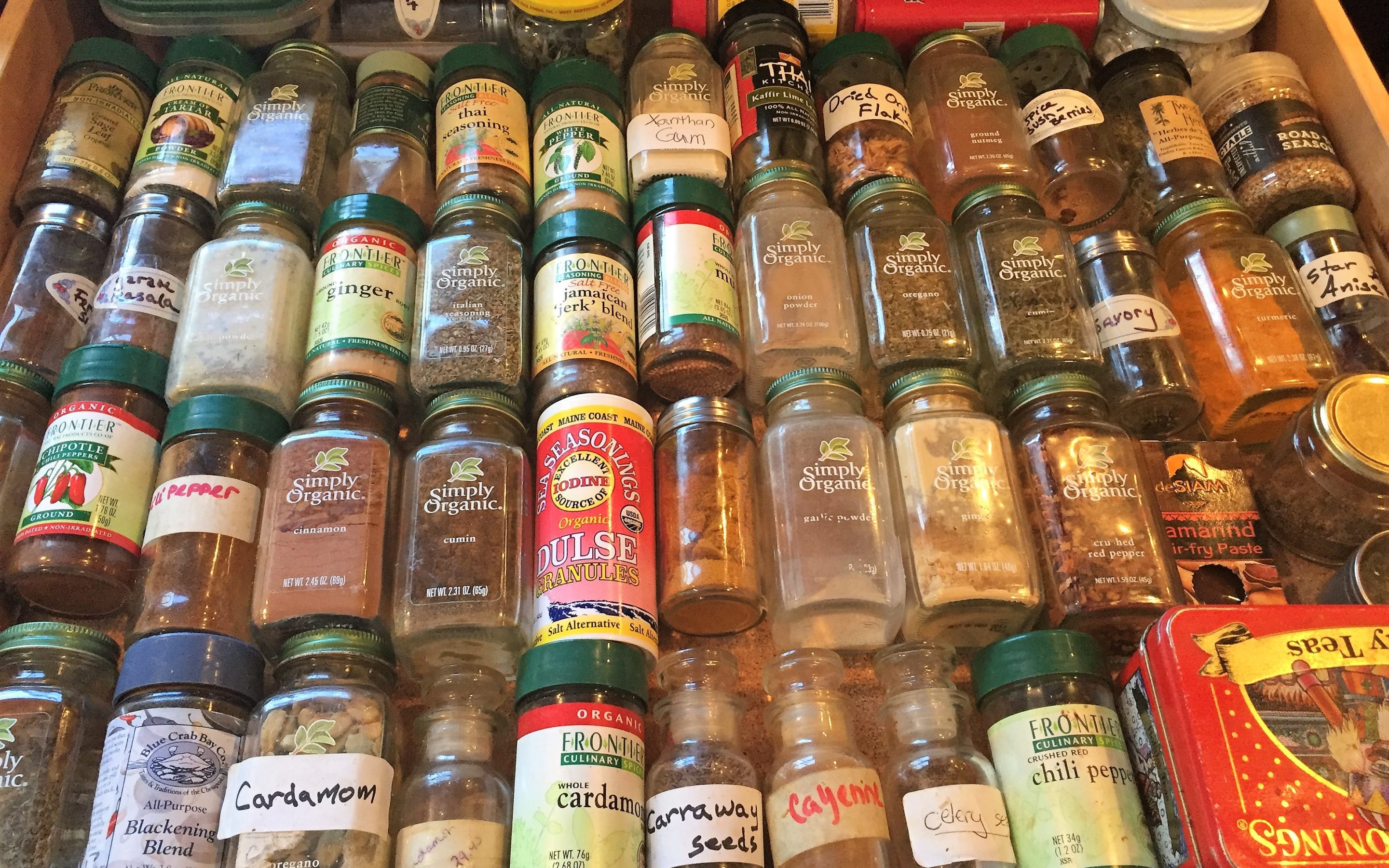
A spice and herb collection is an important part of a kitchen pantry. Whether your collection consists of a small basket, a shelf or a drawer full, it’s hard to build flavor without them. Dried herbs and spices are used in small amounts, an inexpensive bang for the buck. Take a trip to another country by indulging in exotic aromas, experimenting with different flavor profiles, and discovering something new and delicious.
Herbs and spices are one of the simplest ways to bring life back into your cooking, but a lot of people aren’t quite sure how to use them well.
Spices come from the seeds, roots, or bark of a plant. You’ll usually find them whole or ground. Herbs come from the leaves. Some are used for cooking, others for their medicinal properties. Most of us use them for both, whether we realize it or not.
If you’ve ever looked at the price of dried herbs and spices and hesitated, you’re not alone.
They can seem expensive at first glance. But you only use small amounts at a time, so they last much longer than you’d expect.
When it comes to choosing organic, it’s less about being perfect and more about being aware. Organic herbs and spices are grown and processed without many of the pesticides or additives you’ll find in conventional options. Some conventional products are also treated to extend shelf life or prevent clumping. For some people, those differences matter, especially if you’re already trying to clean up how you eat.
Another place people get tripped up is buying in bulk. It feels practical. It feels like you’re saving money. But herbs don’t hold their flavor forever. Within about six months to a year, they start to lose their strength. That big container in the back of your cabinet usually isn’t doing you any favors.
A better approach is to buy smaller amounts more often.
Many markets let you scoop exactly what you need, which keeps everything fresher and more flavorful.
A quick way to tell if your herbs are still worth using is to smell them. They should be fragrant and noticeable. If you have to work to smell anything, they’re not going to do much for your food.
If you’re cooking with both fresh and dried herbs, a simple guideline helps. One tablespoon of fresh herbs is about equal to one teaspoon of dried. Some herbs like sage or rosemary are stronger, so it’s always better to start with less and adjust as you go.
There are also a few small techniques that make a big difference in flavor. Rubbing dried herbs between your fingers before adding them helps release their natural oils. Adding sturdier herbs earlier in the cooking process gives them time to develop. Toasting spices, even briefly, brings out a deeper, warmer flavor. Letting herbs sit in a little warm oil before using them in a dressing or marinade can completely change the end result.
None of this needs to feel complicated. It’s just about paying a little more attention to the ingredients you’re already using.
Over time, you start to notice something. You rely less on salt or sugar to make food taste good. The flavors stand on their own. And meals start to feel a lot more satisfying without needing anything extra.